

01
Technical data
Our reading on the left, the standard on the right.
Values come from the current production batch and the test log that ships with it. Where a European regulation sets the limit we name it; where the limit is ours we say so, because an in-house rule and a legal one are not the same thing and blurring them is how this trade loses buyers.
| Parameter | Unit | Ferrhaus | Limit / standard |
|---|---|---|---|
| Weight deviation, batch average | % | 0.6 | in-house reject above ± 1.5; trade practice ± 3 |
| Weight deviation, single piece max | % | 1.4 | in-house reject above ± 1.5 |
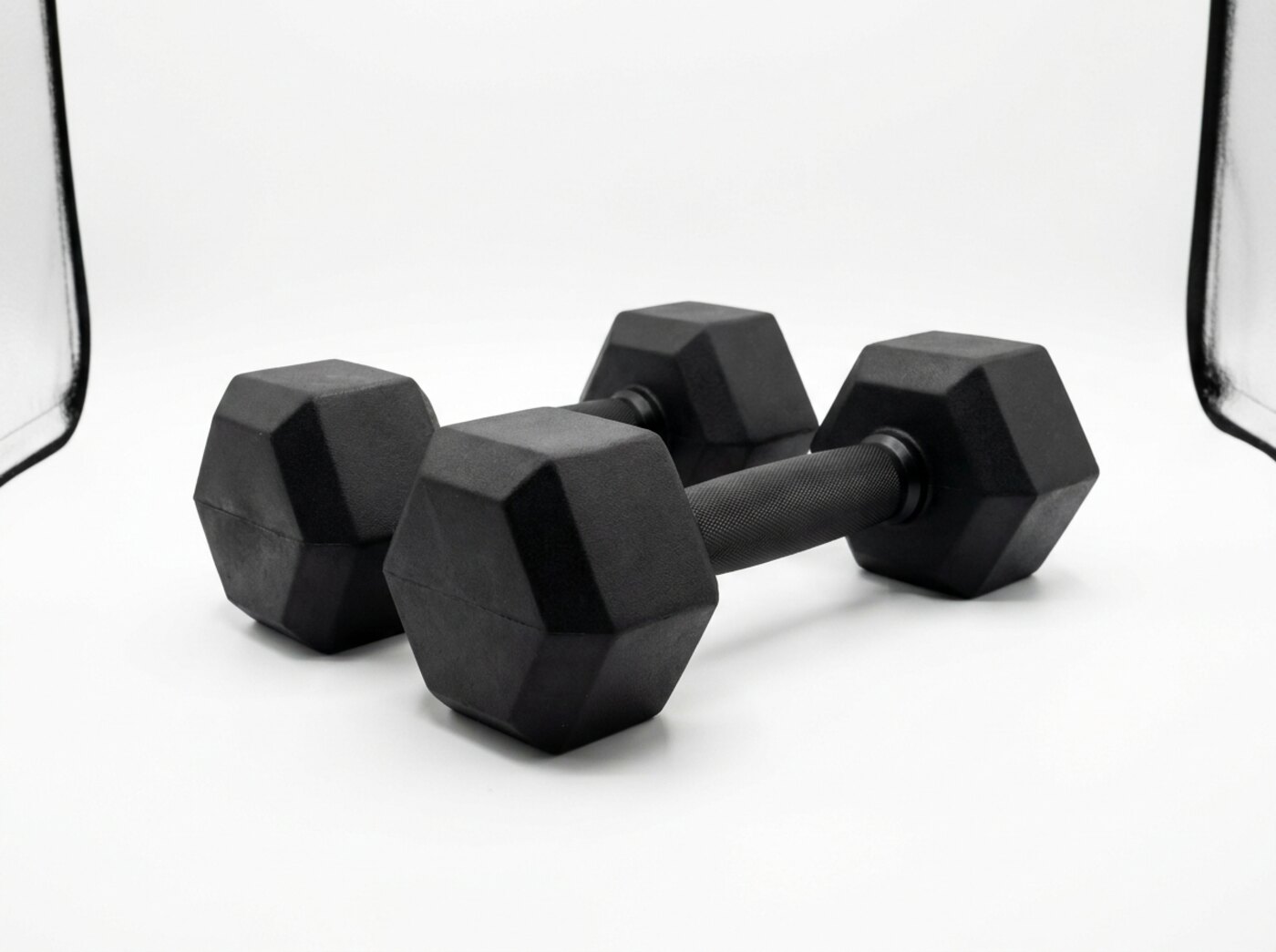
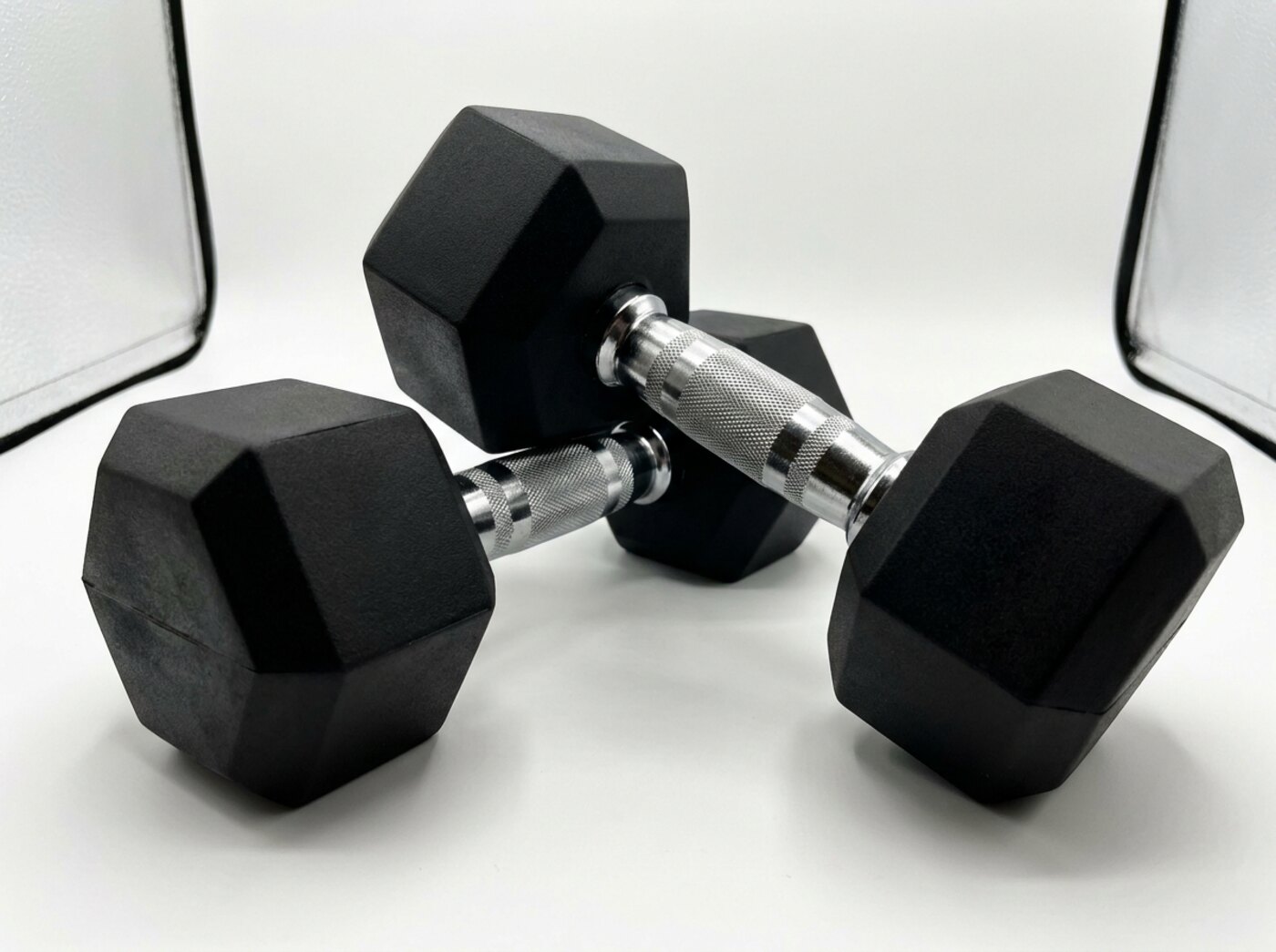
| Head material | — | EN-GJL-200 grey iron | EN 1561, min. 200 MPa tensile |
| 8 PAHs in coating | mg/kg | < 0.2 | REACH Annex XVII/50, max. 1.0 |
| Coating hardness | Shore A | 65 ± 5 | in-house window 60 – 70 |
| Coating thickness, head face | mm | 5.0 | in-house minimum 4.0 |
| Coating adhesion, pull-off | MPa | 3.2 | in-house minimum 1.5 |
| Drop test before batch release | drops from 1.2 m | 5,000 | in-house; no coating separation permitted |
| Handle finish | — | Hard chrome over steel, knurled | — |
| Handle salt spray, ISO 9227 NSS | h | 96 | in-house minimum 48 |
| Handle pull-out force | kN | > 12 | in-house scrap below 8 |
| Handle diameter, 1 – 10 kg | mm | 28 | declared |
| Handle diameter, 12.5 – 50 kg | mm | 32 | declared |
| Increment, 1 – 10 kg | kg | 0.5 | declared |
| Increment, 12.5 – 50 kg | kg | 2.5 | declared |
| Marking | — | kg cast into the head, batch laser-etched on the handle | traceable to melt and coating lot |
EN ISO 20957-1 sets the general safety requirements for stationary training equipment; free weights are covered by its general clauses rather than by a dedicated part, so the numbers that decide a dumbbell are the material, the coating chemistry and the tolerance. REACH Annex XVII entry 50 is the binding one for a rubber-coated product sold into the EU: eight polycyclic aromatic hydrocarbons, one milligram per kilogram, in any part with prolonged skin contact.
Full technical data, quality window and container loading →02
Where we sit in the window
Passing is binary. The margin is the product.
Every rubber-coated dumbbell sold into the EU clears the same chemical ceiling and every maker claims the same weights. What separates one from the next is how much room is left between the reading and the limit — because that gap is what is still there after four years of being dropped on a rubber floor.
- 8 PAHs in the coating compound0.2mg/kg0limit max 1 mg/kg · REACH XVII/50 ceiling 1.01.5
Tested per compound batch by an accredited laboratory, referenced by report number on the packing list. Reclaimed rubber typically reads between 2 and 20 mg/kg, which is why we do not buy it.
- Weight deviation across the batch0.6%0limit max 3 % · trade practice ± 3 %3.5
Mean absolute deviation over a 500-piece sample, weighed finished. Our own reject line is ± 1.5 %; a piece that misses goes back to the melt rather than being stamped as the next increment.
- Handle salt spray, ISO 9227 NSS96h0limit min 48 h · in-house minimum 48 h120
Neutral salt spray to first white rust on the chrome. Ninety-six hours is what keeps a handle presentable in a humid coastal gym, which is where most of the complaints in this category come from.
- Coating adhesion, pull-off3.2MPa0limit min 1.5 MPa · in-house minimum 1.5 MPa4
Measured on the head face after the 5,000-drop cycle, not before it. Adhesion measured on a fresh piece tells you nothing about the failure everyone actually sees: rubber peeling off the corner of the hex in year three.
PAH and salt spray figures come from accredited laboratory reports for the compound and the plating in use. Weight, adhesion and drop figures come from our own test log for the batch, referenced by lot number. Both sets go out with the document set on request.
03
Container loading
How much goes in a box, before you ask.
Figures are calculated from pallet weights against container payload limits. Read the note before you plan a 40 ft: this is dense cargo and almost nothing here fills a box by volume.
| Item | Pack | Gross (kg) | 20 ft | 40 ft | 40 ft HC | 45 ft | Truck |
|---|---|---|---|---|---|---|---|
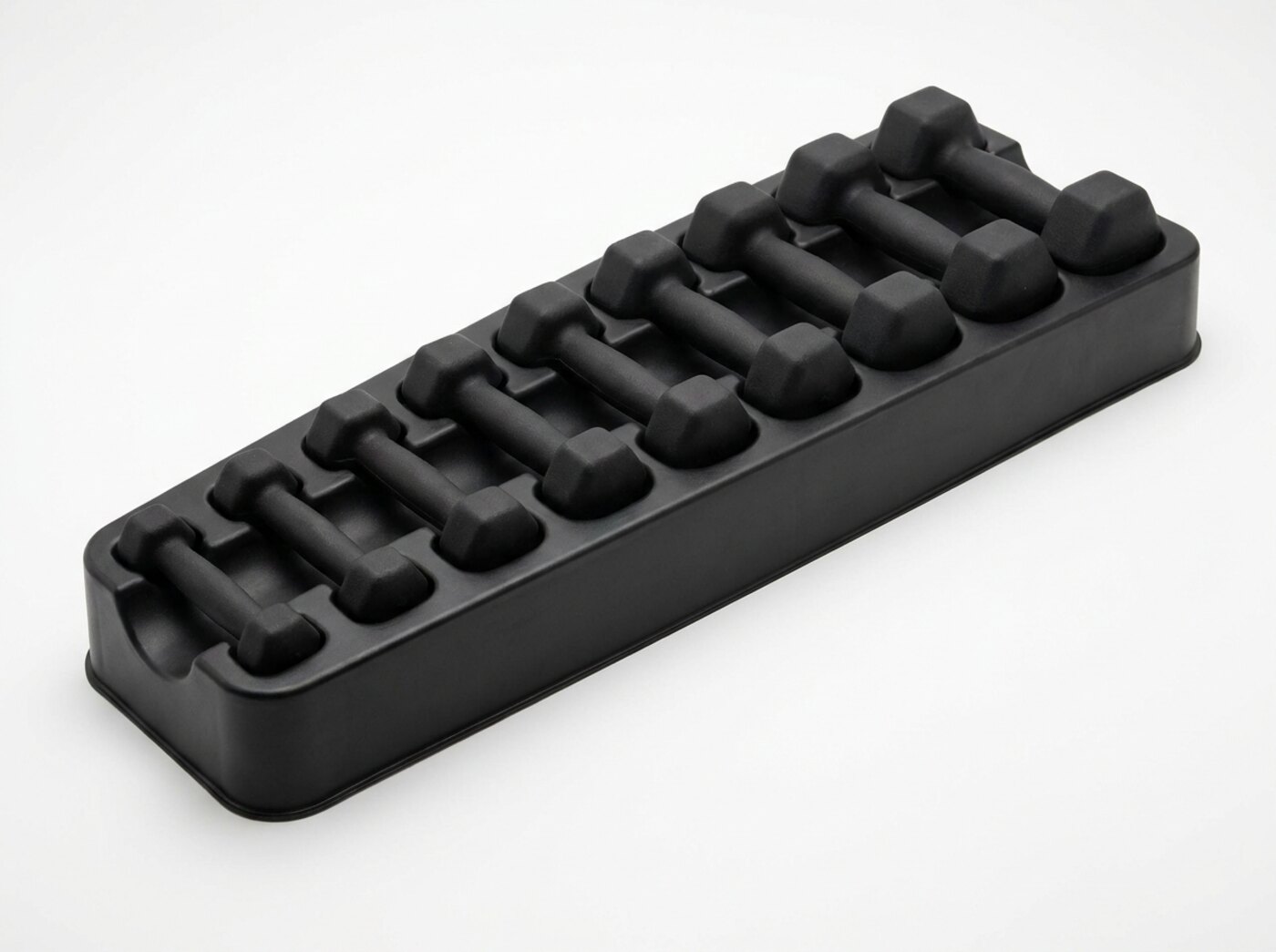
| H·RC set, 1 – 10 kg | carton + cradle | 118 | 237 | 224 | 224 | 233 | 203 |
| H·RC pairs, 12.5 – 30 kg | pallet, 8 pairs | 340 | 82 | 77 | 77 | 81 | 70 |
| H·RC pairs, 32.5 – 50 kg | pallet, 4 pairs | 340 | 82 | 77 | 77 | 81 | 70 |
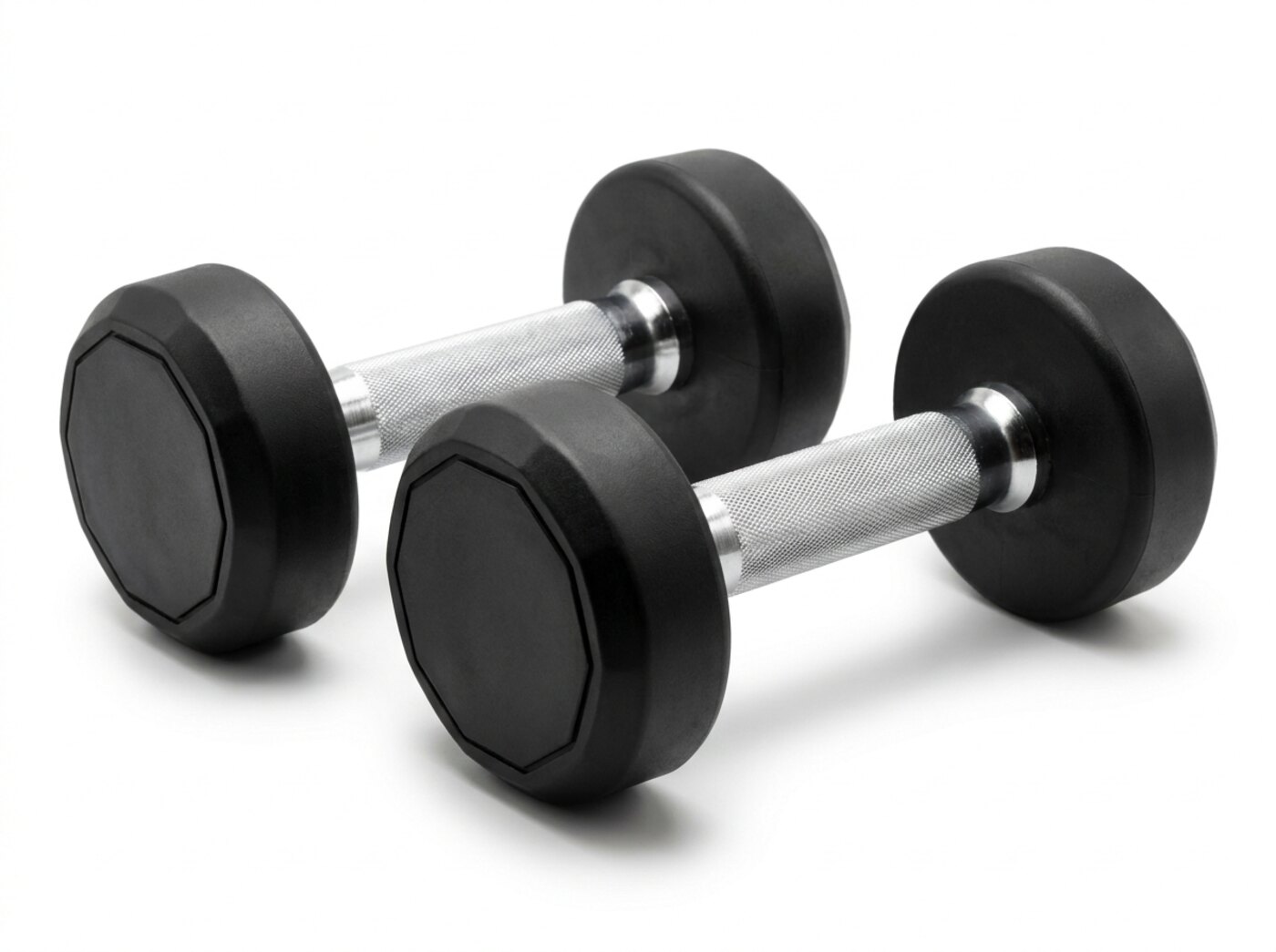
| H·PU pairs, 2.5 – 25 kg | pallet, 10 pairs | 310 | 90 | 85 | 85 | 89 | 77 |
| R·PU pairs, 2.5 – 60 kg | pallet, 6 pairs | 380 | 73 | 69 | 69 | 72 | 63 |
| DR·10 rack, knocked down | crate | 82 | 100 * | 200 * | 220 * | 240 * | 190 * |
Weight is binding, not volume. A 20 ft reaches its 28 t payload with roughly a third of the box still empty, and a 40 ft is capped at 26.5 t — five percent less than the 20 ft it costs nearly twice as much to move. For dumbbells the 20 ft is almost always the cheaper box per tonne, and mixing a rack order into the empty space is free freight. Rows marked * are volume-bound rather than weight-bound. Destination road limits often bite before the container limit does: check the axle rules at the delivery address, not at the port. Send the mix and the port and we return an exact stow plan with the quotation.
04
Compliance
The document set a distributor opens first.
Free weights are bought on chemistry and on what the coating does in year four, not on a quality-system logo. The set below goes out with the quotation, referenced by lot number so the buyer can verify it at the issuing body rather than trusting a scan.
EN ISO 20957-1
Stationary training equipment — general safety requirements and test methods, applied to the free-weight range
REACH Annex XVII, entry 50
Eight polycyclic aromatic hydrocarbons in rubber and plastic parts with prolonged skin contact — max. 1.0 mg/kg, tested per compound batch
EN 1561
Grey cast iron, grade EN-GJL-200 — mill certificate issued per melt
ISO 9227 NSS
Neutral salt spray on the chrome handle finish — report issued per plating lot
ISO 9001:2015
Quality management system covering the foundry, the machining shop and the coating line
Declaration of Conformity
Issued per product line and named on the packing list of every shipment
Send the mix. We will send the stow plan.
Tell us the lines, the increments, the annual quantity and the destination port. You get a unit price, a container loading plan and a delivery date — usually within two working days.